

Boredom Busters: Indoor Enrichment Ideas for Happy Pets
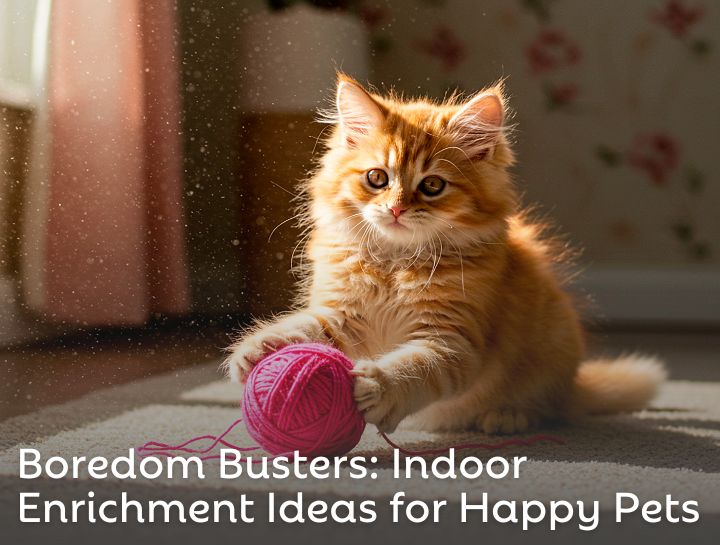
As the temperatures drop and the days get shorter, our pets often find themselves spending significantly more time inside. While the couch is a cozy spot, a lack of mental and physical stimulation can lead to unwanted behavior. Boredom in pets isn't just a minor inconvenience; it often manifests as destructive chewing, excessive barking or meowing, and increased anxiety.
During the colder months, intentional enrichment is crucial for maintaining their cognitive health and overall well-being. By blending interactive play with independent activities, you can ensure your pet remains sharp, tired, and happy.
Interactive Play: Strengthening Your Bond
Interactive enrichment requires your participation. These activities are excellent for burning off high energy and reinforcing training cues.
-
Classic canine games: A game of fetch or tug-of-war are great for physical exertion.
-
The cat wand: A wand toy mimics the movement of prey and triggers their natural hunting instinct.
-
Hide and seek: Command your pet to "wait" in one room, while you hide in another and then call them. Reward them with praise or a treat when they find you.
-
Scent and nose work: Hide high-value treats around the living room and encourage them to “wait” then "find it."
-
Trick training: Use this time to polish basics like “sit” and “shake,” or challenge them with something new, like "roll over" or "touch."
Independent Activities: Boosting Focus
Independent enrichment is perfect for when you are working from home or need your pet to settle down. These activities focus on "working" for food.
-
Puzzle feeders and toys: Items like snuffle mats, Kongs, or slow feeders turn a quick meal into a longer mental workout.
-
Treat-releasing toys: These require the pet to nudge or roll an object to get a reward, mimicking the "foraging" behavior found in the wild.
-
Gamified mealtime: Instead of a bowl, lay a trail of kibble leading through the house, or hide their food bowl in a different room each day to keep them searching.
Example Weekly Enrichment Calendar
Consistency is key to preventing boredom. Use this sample schedule to balance different types of stimulation throughout the week.
-
Monday – Sensory Focus: Snuffle mat for breakfast and 10 minutes of scent work in the evening.
-
Tuesday – Physical Focus: Interactive play in the morning and another play session in the evening.
-
Wednesday – Cognitive Focus: Utilize a slow feeder bowl for all feeds and attempt to teach your pet a new trick.
-
Thursday – Social Focus: Start the morning with some hide-and-seek, then practice tricks your pet already knows before bed.
-
Friday – Exploratory Focus: Leave a trail of kibble through the house for an enriching mealtime and also introduce a new puzzle toy.
-
Saturday – Combo: Combine an interactive play activity with something like a long-lasting chew or lick mat treat later in the day.
-
Sunday – Rest: Window/bird watch with your pet and give them a gentle grooming or massage.
Pro-Tips for Success
-
Rotate toys: Don't leave every toy out at once. Keep a rotation bin and swap items every few days to keep them feeling new.
-
Use their meal: You don't always need extra treats! Use their normal food or kibble for training and puzzles to prevent weight gain.
-
Observe and adapt: Every pet is different. If your cat gets frustrated by a puzzle, make it easier. If your dog solves a game in seconds, increase the difficulty.
-
DIY enrichment toys: Save money while keeping your pet’s environment fresh. Utilize muffin tins as slow feeders, scatter kibble in a beach towel and roll it up to create a snuffle mat, or glue empty toilet paper rolls to a flat piece of cardboard and fill the tubes with a couple of treats to encourage your pet to paw them out.
We’re Here to Help!
Sometimes changes in behavior or persistent restlessness can be a sign of underlying needs. If you have questions about your pet’s behavior or want more tailored enrichment advice, please don't hesitate to reach out to us at (972) 556-1966. We are dedicated to helping you and your furry companions enjoy a happy, healthy winter season.